
For our first Financial Topic Webinar Series Andrew Steffensmeier and Stacy Dieckman provide insight on college planning. Recorded 9/21/2022.
Category: Blog
Christmas in July!
We held a 🎄“Christmas in July”🎄 toy drive and challenged our staff to collect as many toys as we could for pediatric patients at Faith Regional. The generosity of our employees and their families was clearly displayed as we were able to donate over 300 toys! Thanks to our employees and their families for supporting the community that we love! 🥰 We hope this will brighten the day for many young patients! 🧸🪀




Lemonade Camp 2022
Our largest camp yet, 80 kids attended! Campers raised $955 for the Norfolk Library Foundation!
WEBINAR (5/19/22) – Crypto 101
Jared Faltys (CPA, PFS, CPFA) McMill CPAs & Advisors Partner, Paul Feilmeier (MS) NECC Vice President of Technology Services, and Nicole Sedlacek (CEcD) NPPD Economic Development Manager present the basics on cryptocurrency. Recorded 5/19/2022
Lemonade Camp 2022
Save the Date – Wednesday, August 3, 2022
We are looking forward to hosting Lemonade Camp 2022! McMill CPAs & Advisors has a mission to educate and bring simple, proven financial principals to the community, especially the local youth. Lemonade Camp is one of our favorite ways to do that! Incoming 1st through 6th graders are invited to attend a free, educational and fun Lemonade Camp to learn what it is like to be an entrepreneur.

Check out the story in the recent Norfolk Now magazine, featuring details about the fun and learning that happens at our Lemonade Camp each year.
Read the article.

We Love Our Northeast Community College Interns
McMill CPAs & Advisors is a great place to begin your career. We are proud to partner with Northeast Community College in offering internships to students and keeping our graduates in our area of the state!
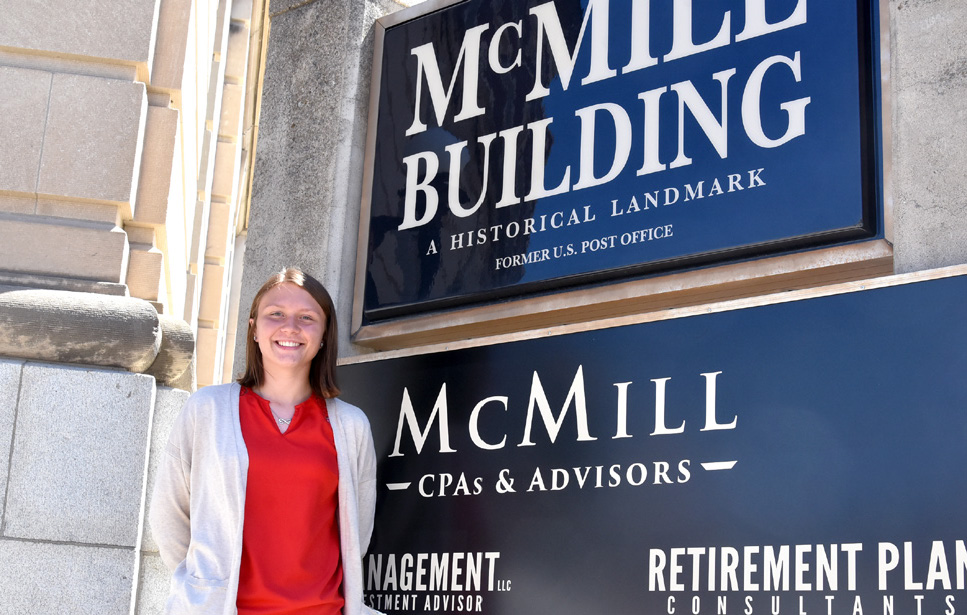
Check out the story in the recent Northeast Community College Graduate Employment Report, featuring our very own payroll team staff member, Morgan Haner.
Read the article.

WEBINAR – Nebraska Property Tax Credit Look-up Tool Instructions for 2021
Clint Weeder and Andrew Steffensmeier discuss the Nebraska Property Tax Incentive Act that went into effect last year and the online look-up tool that helps you generate the info to give your tax preparer. This will help to complete your taxes properly and make sure you receive any tax credits you are due.
Look-up tool: https://revenue.nebraska.gov/about/nebraska-income-tax-credit-school-district-taxes-paid-nebraska-property-tax-incentive-act
Recorded in 2020.
LOCAL CPA FIRM CONTINUES TO GROW WITH AN EXCITING NEW ANNOUNCEMENT
McMill CPAs & Advisors, one of the largest financial firms in Northeast Nebraska, is excited to announce the addition of a new shareholder, Andrew Steffensmeier. He becomes a shareholder alongside Nancy Brozek, Jared Faltys and Clint Weeder.

A native of Lincoln, Andrew now resides in Norfolk with his wife, Cortney, and their two daughters, Sunny and Scottie. Mr. Steffensmeier keeps busy with his girls by venturing around town exploring playgrounds and other activities for the kids. When not busy with his family, he enjoys the outdoors and working on his golf game. Andrew joined the firm in 2013 as a staff accountant. In his nearly 10 years with the firm, Andrew has been driven to helping his clients achieve financial success. As a result of this dedication, he has established a strong client base that depends on his expertise and appreciates his personable demeanor. McMill CPAs & Advisors is proud to have Andrew on our team of 13 CPA’s, offering a combined 300+ years of experience in accounting, business consulting, tax planning and wealth management. Clint Weeder, shareholder, states “We are excited to add Andrew as a shareholder. His focus on leadership and the community is evident in how well he serves his clients and their families. Their continued success is always his number one priority.”
Andrew has a Bachelor of Science degree in Accounting and a Master of Public Accountancy from the University of Nebraska in Lincoln. Andrew specializes in corporate taxation, wealth management, income tax planning and preparation, and business consulting. Professionally, he is a member of the Nebraska Society of CPA’s and American Institute of CPAs. Locally, Andrew is involved with the Norfolk Area Chamber of Commerce, Leadership Norfolk, and the Norfolk Area Community Foundation. Andrew sees the importance of educating the youth in our community on how to set themselves up for financial success. He has presented financial literacy lessons at multiple local schools, as well as at our annual Lemonade Camp.
McMill CPAs & Advisors was established in 1948 and has enjoyed serving Norfolk and the surrounding communities over the years. The firm specializes in serving businesses, their owners, and the complete ecosystem those owners care about. Services provided by McMill include tax planning and preparation, wealth management, estate planning, payroll and bookkeeping services, QuickBooks consulting, auditing and assurance services and company retirement plans. McMill is a family firm that believes in the power of a close community supporting itself by caring for each other.
Breaking Down Business Accounting Services by Industry

Jared Faltys
Specializes in financial planning, business tax planning, investment advisory services
EmailAs a Norfolk small business owner, there are a lot of responsibilities that you have to juggle. Dealing with accounting and bookkeeping only adds to the stress and can be an extremely challenging space to navigate. This guide will help you learn about different business accounting services that are available and useful for different industries to help you navigate your small business accounting more effectively. Let’s dive in!
Table of Contents
- Business Valuation Services: How Do You Compare to the Competition?
- Business Valuation Methods for Optometrist Practices
- What Is Land Depreciation, and How Can You Take Advantage of it?
- Purchasing a Farm: Land Depreciation vs. Amortization
- How to Improve Your HVAC Business With Productivity Consulting
- A Business Owner’s Introduction to Cost Segregation Studies

Business Valuation Services: How Do You Compare to the Competition?
Business valuation services help you prepare for the future and understand the health of your organization. They help ensure your business stays viable and give you a plan for potential future decisions.
What Are Business Valuation Services?
A business valuation is the process of evaluating the economic value of a company. Business valuation services come into play to find the true value of a business due to several reasons including:
- Determining the value during a company sale.
- Estate planning to determine how your business will be treated as part of your estate.
- During any court case.
- When you are planning to bring in other potential partners.
- When putting in a strategic plan for the future.
- During the process of acquiring capital from investors.
How Is a Business Valued?
There are multiple factors that go into the business valuation. These typically include:
- Net assets.
- The market value compared to peers.
- An analysis of cash flow.
To learn more about what a business valuation is and how it is conducted, read this comprehensive article that will tell you everything you need to know about business valuation services.
Business Valuation Methods for Optometrist Practices
Many optometrist practices are either unsure of what their business is worth or utilize the wrong valuation techniques, therefore, having a false understanding even though having a proper valuation is a crucial component of a healthy retirement plan. Here are some ways to plan ahead and make your business more valuable.
EBITDA
EBITDA stands for earnings before interest, taxes, depreciation, and amortization and is a comprehensive measure of a business’ worth. Buyers will typically want three to five years of history to see what the overall trend of the business is and if it’s trending upward.
Tracking your company’s EBITDA over multiple years will put you a step above most of your competition and can highlight how well your company has been doing in comparison to the industry standard.
Breaking Down Multiples
Once the numbers are compared to the benchmarks, the industry, and other similar practices, then EBITDA tends to come into play to where a “multiple” is applied. A multiple is a runway of time. This is the amount a buyer is willing to pay for a business based on EBITDA, typically anywhere from two to nine times EBITDA, as the multiple.
To break it down further, this means the buyer is willing to pay two to nine years’ worth of earnings the practice has generated.
Why Are You Selling?
It is essential to understand why you are selling in the first place. If you’re still having fun or if you still feel that the future of your company is extremely positive, then I want you to take a step back and just do a soul search to determine if this is the right decision of going down the road of merging with a practice or selling.
Understanding the value of your business will help you understand its health. It can help you make big decisions for your future and determine when the right time to sell is. For more information about business valuation methods for optometrist practices, read this blog.
What Is Land Depreciation, and How Can You Take Advantage of it?
Another option for ensuring you are receiving the largest ROI on your land is to take advantage of land depreciation. In this instance, the IRS allows you to allocate the depreciation cost over the life expectancy of an asset.
When Does Land Depreciate?
Land does not have a defined useful life, making it nearly impossible to account for depreciation. And depending on certain factors, its value may either rise or fall over time. Although land cannot necessarily be depreciated, certain altercations you make to it can be. Some examples include:
- Paving
- Building fence
- Outdoor lighting
- Filling a wasteland with soil to make it usable
To properly account for land improvements, a business needs an account entry in the general asset ledger. Any improvements that you make will debit your expense account and credit the land improvements account.
Why Would I Want to Account for Land Depreciation?
The main reason you would want to account for land depreciation is that it helps you make and save more money. It can also help display aspects causing the expansion of your business.
Land depreciation can be a confusing topic to fully understand. For more information on it, check out this informational article.
Purchasing a Farm: Land Depreciation vs. Amortization
From a high-level view, purchasing a farm may seem like a good investment. However, the net return is often much lower than originally anticipated. To counteract this, there are certain items you may depreciate or amortize to gain back some of that return.
Amortization vs. Depreciation
When you purchase a farm, you also gain multiple assets that will deteriorate over time. Oftentimes, their cost can be expensed based on that life expectancy. You can do this in two ways:
Amortization
Amortization is a way to calculate the total cost of an asset over its useful life. However, amortization is used for intangible assets, unlike depreciation.
Depreciation
Depreciation is a way to calculate the total cost of an asset over its useful life. It is used to establish the cost of obtaining the asset compared to the income it provides. Depreciation is used for tangible assets.
Depreciating Farm Assets
The most common depreciating asset on a farm is specific structures that may be deteriorating. Some of these structures may include fences, grain bins, farm sheds, irrigation systems, and other tools and equipment. Having the ability to write off these assets when tax season rolls around will help you offset the amount you are paying for the farm.
Amortizing Farm Assets
In certain circumstances, you can count dirt on a farm as an amortizing asset. To do so, the first step is to determine if there are more fertilizer nutrients in the ground than what is considered average. To check the levels of your land, you can hire an agronomist to collect soil samples from areas around the farm to analyze the nutrient values.
After a sample is collected, you’ll need to compare it to the average in your area. If you have any values that are above average, you can typically amortize your soil.
To read a more in-depth analysis of depreciation and amortization when purchasing a farm, please take a look at this helpful guide.
How to Improve Your HVAC Business With Productivity Consulting
Ensuring that your HVAC business is functioning at its highest level of production is essential to preparing for the future. With all of the moving pieces that accompany this industry, it is crucial that everything is working as efficiently as possible.
What is Productivity Consulting
The National Association of Productivity & Organizing Professionals (NAPO) defines the role of productivity consultants as the support for “evaluation, decision-making, and action around time, energy, and resources; helping clients achieve desired outcomes regarding goals, effectiveness, and priorities.”
A productivity consultant can help your business target areas where it can increase productivity. They will evaluate your current processes and help you create a plan to increase productivity and efficiency in the areas that need help.
How Productivity Consulting Will Improve Your HVAC Business
Productivity consulting is especially beneficial for HVAC companies because each job requires a certain process to be done correctly. They can help you increase productivity for:
- Vehicle Prep
- New Equipment Purchases
- Implementing New Technology
A consultant can take planning and organization off your plate so you can focus on other areas of your business. To learn more about how a productivity consultant can help your business, read this article.
A Business Owner’s Introduction to Cost Segregation Studies
Starting a small business is challenging and the majority have to close their doors because of a lack of cash flow within the first year. One solution to this problem is cost segregation. A cost segregation study usually results in greater tax savings and financial leniency for businesses.
What Are Cost Segregation Studies?
A cost segregation study refers to the process of splitting elements of a property into categories for tax reporting purposes. Essentially, the study accelerates depreciation so that the owner can take out a higher tax deduction immediately.
The process of a study includes:
- Analysis of what your benefits may be
- Gathering of essential documents
- Property examination
- Full report produced with results
Benefits of a Cost Segregation Study for Small Business Owners
The greatest benefit of a cost segregation study is alleviating some of the financial burdens that fall on new businesses. Additional benefits can include:
- Various properties may be studied
- Different benefits for different depreciable assets
- Uncover additional saving opportunities
- Reduce the cost of expensive equipment
For more information about cost segregation studies, read this all-inclusive guide to cost segregation studies.
The Comprehensive Financial Planning Handbook

Andrew Steffensmeier
Specializes in small business preparation and planning, investment advisory services, business tax planning services
EmailFinancial planning can be a headache. From dealing with inflation to organizing a will, there are many financial responsibilities you have to deal with. Knowing where to start can be a challenge all on its own, which is why we developed a comprehensive financial planning handbook, so you can reference a guide on how to handle different financial tasks. Keep reading to dive into our helpful guide.
Table of Contents
- 5 Questions to Ask Before Hiring a Personal Financial Specialist
- What Does Rising Inflation Really Mean for Consumers?
- 3 Mistakes a College Planning Consultant Helps You Avoid
- Breaking Down the Buy-Sell Agreement
- How Keep Your Financial House Organized
- What Happens When You Don’t Organize a Will and Power of Attorney?

5 Questions to Ask Before Hiring a Personal Financial Specialist
A personal financial specialist is a certification for certified public accountants that allows them to include financial planning and wealth management in their catalog of services. Business owners are also able to take advantage of a PFS to help their organization build wealth and remain financially sound. To know if you are ready to take the next step and hire a PFS, here are some questions you should ask yourself.
- What Is Your Investment Strategy?
Understanding your investment strategy is a key component of understanding whether or not you should hire a PFS. How often are you monitoring and adjusting your investments? Are you setting goals and objectives? A financial specialist can help you determine your goals and ensure your investment strategy aligns with those goals.
- How Organized Are Your Finances?
As your portfolio continues to grow, it may get more challenging to keep it all organized. Financial specialists can help you keep track of your different financial assets and consolidate them when it makes sense. They are also knowledgeable about what investments to make while mitigating any potential risks.
- Are You Making a Life-Changing Decision?
Hiring a financial professional when dealing with a huge change like the selling of a business is a smart move for you. They are educated on the tax implications that accompany this type of scenario and can help talk you through decisions to ensure you’re making the right one.
- Is Tax Planning Becoming Overwhelming?
Tax planning and financial planning are interconnected and working with a professional that can assist with both is a smart move for your business. They will help you avoid financial mistakes that will result in large taxes and can help take some of the load off your plate when tax season rolls around.
- What is Your Retirement Plan?
A PFS will work with you on your goals for the short and long term. This way they can help you develop a comprehensive plan to help you get there. Retirement planning is evolving which makes an educated professional who understands the changing landscape a huge asset to have in your court.
For more information about the questions, you should be asking before hiring a professional financial specialist, read this helpful article.
What Does Rising Inflation Really Mean for Consumers?
Many business owners have been concerned about rising inflation and what that means for them. You may be wondering where you should put your money and what other changes accompany this new landscape we are dealing with. Here is what to expect.
The Current State of Rising Inflation
Rising inflation has been inevitable since the start of the COVID-19 pandemic. It has been most prominent in the food, automobile, energy, and housing markets however, it has been said that it should be short-lived and may actually have a positive impact in the long run.
The government has made it clear that they don’t believe this rising inflation is here to stay and hopefully things will go back to normal as people head back to work. However, with that said, the question remains; how long will that take?
How Can You Act Proactively?
Unfortunately when inflation spikes, small businesses are hit harder than large corporations. It costs more to purchase the same things and therefore, your purchasing power is cut. There are two ways you can act proactively:
- Stay in the Stock Market
It is essential to stay in the stock market to protect your long-term assets. While inflation may hinder your stocks right now, it is typically beneficial in the long run.
- Invest in Mutual Funds
When you invest in a mutual fund, you contribute to a pool of money alongside other investors, managed by a team of professionals looking to purchase securities. More specifically, when you take a Passive Asset Class Management Approach, you go the route of broad diversification and a controlled-risk environment.
Rising inflation is a concern of many small business owners. For a deeper understanding of what rising inflation means for you and how you can act proactively, take a look at our informative guide.
3 Mistakes a College Planning Consultant Helps You Avoid
Planning for your child’s future is a big task, and with college tuition on the rise, it is more difficult than ever to properly prepare for this future. Luckily, college planning consultants are available to assist you with the planning process to help you bypass making mistakes along the way. Here are three main mistakes a college planning consultant will help you avoid.
Not Considering Community College
There is a common misconception that community college is less valuable than other colleges and universities. This idea is simply incorrect. Community colleges can be a great way to reach the same end goal, more affordably. Even just starting the first two years at a community college has numerous benefits including:
- Saving money on tuition
- A great way for students to transition out of high school
- Many community colleges still offer dorm living
- Smaller class sizes mean a more hands-on learning environment
Avoiding the Income Talk
The financial burden of higher education can be one of the most intimidating factors when it comes to college planning. While income shouldn’t be the only determining factor for what your child wants to major in, it should be a factor. Your child should understand that if they have to take out a loan to pay for school, certain career choices will put them deeper into debt than others and some careers will make it more difficult to pay off student loans than others.
Not Applying for FAFSA
While the Free Application for Federal Student Aid (FAFSA) is typically used for students who need free financial aid, it can also be beneficial for gaining access to The Stafford (Direct Federal Loan) and other scholarship opportunities. All too often families think they won’t be eligible so they don’t even apply which leaves money on the table.
There are many mistakes families make when planning for their children’s college education. To learn more about these mistakes and see one more, check out this article.
Breaking Down the Buy-Sell Agreement
Small businesses that hope to protect the longevity of their company need to implement a buy-sell agreement. This will protect the continuity of your organization if anything happens to any of the shareholders. Keep reading to learn more about what a buy-sell agreement is and whether or not you need one.
What Is a Buy-Sell Agreement?
A buy-sell agreement is a legally binding contract between two or more shareholders that defines how their portion of ownership should be handled in case of a triggering event. This will streamline the process so there isn’t confusion if something goes wrong.
What Are the Triggering Events in a Buy-Sell Agreement?
Triggering events are the events that activate the buy-sell agreement. Some of these can include:
- Death
- Divorce
- Termination of Employment
- Bankruptcy
- Disability
Do You Really Need a Buy-Sell Agreement?
Every organization owned by two or more parties should have a buy-sell agreement. Here are a few reasons why:
- You’ll have an exit plan for your members
- It will give clear instructions on what should happen to a partners portion if they pass away
- Ensures job stability for other employees
- Establishes a set value for the business
A buy-sell agreement protects you and your partners in the instance of a life-altering event. Without an agreement, your company could be in jeopardy if something catastrophic happens.
The Basics of Crafting a Buy-Sell Agreement
- Decide Which Agreement is Right For You
There are multiple kinds of buy-sell agreements. These include the cross-purchase agreement, entity-purchase agreement, and hybrid agreements.
- Draft the Agreement Early
It is never too early to have a buy-sell agreement.
- Be Specific
Your agreement should be precise with what qualifies as a triggering event and exactly what will happen.
- Specify the Valuation Method
How will the value of the portion be determined?
- Take out Life Insurance Policies
Life insurance policies should be taken out on each of the partners so that in case of an emergency, the other partners have the funds to purchase the share of the company.
- Account for Taxes
Research the different tax implications for different buy-sell agreements to determine which is right for you.
For more information about a buy-sell agreement, visit this blog.
Keep Your Financial House Organized With an Estate Planning Firm
When you hear the term estate planning, oftentimes people think it is only for the wealthy and that your family doesn’t need to worry about this. However, everyone should have an estate plan. Here is why.
What Is Estate Planning?
The term estate refers to assets such as real estate, vehicles, business ventures, and cash. An estate plan is composed of documents that outline your intentions for these assets when it comes time for them to be passed on. These plans ensure your assets are passed on the way you intended when the time comes and relieves stress on your family members who are left to handle them.
What Is an Estate Planning Firm?
An estate planning firm is a collection of licensed professionals who can assist with the creation, maintenance, and execution of an estate plan. They are educated on legal jargon that accompanies these types of plans and can help you draft a plan that prioritizes your goals. These firms can also assist you in navigating the taxes that come with estate planning so you can be sure you are remaining compliant.
Why Should You Work With a Firm
An estate planning firm will assist you in drafting and seeing your estate plan through. They are a team of professionals who have your back and can help you prioritize and execute your goals.
To dive deeper into what an estate planning firm is and how you can benefit from working with one, take a look at this guide.
What Happens When You Don’t Organize a Will and Power of Attorney?
At least 68% of Americans do not have a will or power of attorney which means they are not prepared for the future. Without a will and power of attorney, an immense burden may be placed on your friends and family to settle your affairs when you pass away or if you become unable to care for yourself. Here is what could happen without a will or power of attorney.
What Is a Will?
A will is a legal document that details what should happen with any children or property if you pass away. This document should be extremely detailed so there is no confusion when it comes time to handle your assets.
What Is a Power of Attorney?
A power of attorney is a legal document that gives another person the power to make decisions for you if something happens that makes you unable to care for yourself. You want to choose someone who will act in your best interests.
How Do They Work Together?
Your power of attorney provides you protection during your lifetime, whereas your will provides protection to your assets after you are gone. Together, they work to protect you and your wishes during your lifetime and after.
Effects of Not Having Them
Without a will or power of attorney, if something happens to you a huge amount of stress will be placed on your family and friends. Here are some specific downsides to not having a will or power of attorney.
Without a Will
- Can’t be sure your wishes will be met
- Can be a huge burden on your family after you pass
- Estranged relatives may obtain some of your assets
- Your children’s care will be left up to the courts
- Can lead to delays, more expenses, and property loss
Without a Power of Attorney
- Appointing a caretaker is more strenuous and time-consuming
- The court appoints a caretaker and the family has no say
- The caretaker chosen may not be fully qualified to represent your needs
A will and power of attorney are necessary documents to have at any age to ensure your wishes are taken into account during and after your life. For more information about these two essential items, read this informative article.